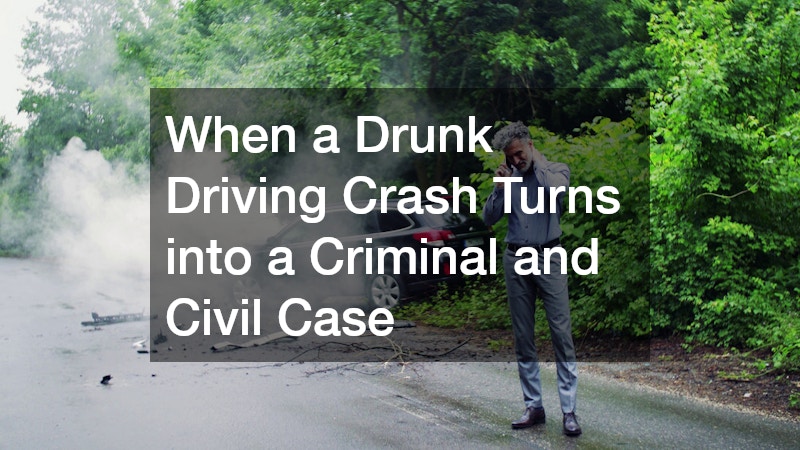
A single drunk driving crash can set off two entirely separate legal battles at the same time, and that reality catches many victims and families off guard. On one track, the state prosecutes the drunk driver for breaking criminal laws. On another, the injured party can pursue compensation for medical bills, lost wages, and pain and suffering. Understanding how these two systems work together, and separately, is the first step toward protecting your health, your finances, and your legal rights after a crash.
How Criminal Charges and Civil Claims Differ After a Crash
When a drunk driving crash happens, the criminal case and the civil case move on parallel but distinct paths. The criminal case is brought by the state or county prosecutor, and its purpose is to punish the driver for violating laws against operating a vehicle while impaired. The civil case, on the other hand, is brought by the injured victim or their family, and its purpose is to recover financial compensation for the harm caused. These cases use different courts, different rules of evidence, and even different standards of proof.
It helps to understand that a criminal conviction is not required for a civil claim to succeed, and a civil settlement does not erase criminal liability. The two processes can run at the same time, sometimes for a year or longer, and outcomes in one can influence the other. For example, a guilty plea in the criminal case often becomes powerful evidence in the civil lawsuit that follows.
- Criminal cases are filed by the government, not the victim
- Civil cases are filed by the injured person seeking damages
- A criminal conviction can strengthen a civil case but is not required
- The two cases can proceed simultaneously in different courts
The Burden of Proof in Each Type of Case

One of the most confusing parts of a dual-track case is understanding how much proof is actually needed to win. Criminal courts require proof beyond a reasonable doubt, which is the highest standard in the legal system and exists because a person’s freedom is at stake. Civil courts use a much lower standard called preponderance of the evidence, meaning the injured party only needs to show it is more likely than not that the driver caused the harm. This difference explains why a driver might avoid a criminal conviction yet still be found liable in a civil lawsuit for the same crash.
- Beyond a reasonable doubt applies only in criminal court
- Preponderance of the evidence applies in civil court
- A lower burden makes it easier for victims to recover damages civilly
- Acquittal in criminal court does not guarantee protection from civil liability
What Happens During the Criminal Prosecution
After an arrest for driving under the influence, the criminal case typically begins with an arraignment, followed by pretrial hearings, and potentially a trial if no plea agreement is reached. Prosecutors rely on evidence such as blood alcohol test results, field sobriety test performance, dashcam or bodycam footage, and witness statements. The driver facing charges will often hire a criminal defense attorney to challenge the evidence, question the accuracy of testing procedures, or negotiate reduced charges. These proceedings can take months to resolve, and the outcome, whether a conviction, plea deal, or dismissal, becomes part of the public record.
Victims sometimes feel left out of the criminal process because they are not the ones filing the case, but they usually have the right to be notified of hearings and to submit a victim impact statement. Staying informed about the criminal case timeline is useful because key documents, like police reports and toxicology results, often become important evidence later in the civil claim.
- Arraignment and bail hearings happen shortly after arrest
- Pretrial motions may address the admissibility of evidence
- Plea negotiations are common and can shorten the process
- Victim impact statements may be allowed before sentencing
Building a Strong Civil Claim for Compensation
While the criminal case focuses on punishment, the civil claim focuses on making the victim financially whole again. This means calculating and documenting every category of loss connected to the crash, from emergency room bills to future rehabilitation needs. Insurance companies representing the drunk driver will often try to minimize payouts, which is why gathering strong documentation early matters so much. Many victims choose to work with a drunk driving attorney who understands how to value a claim accurately and negotiate against insurers who are motivated to settle for less.
Civil claims can include both economic and non-economic damages, and in some states, punitive damages are also available specifically because drunk driving is considered reckless conduct. Punitive damages are not about covering costs but about punishing especially dangerous behavior and deterring it in the future. Because these cases involve overlapping evidence with the criminal matter, timing and coordination between the two cases can significantly affect settlement value.
- Medical expenses, both past and anticipated future costs
- Lost income and reduced future earning capacity
- Pain, suffering, and emotional distress
- Property damage to the vehicle or personal belongings
- Punitive damages in cases involving reckless or intoxicated conduct
Choosing Legal Representation for Your Side of the Case
Whether someone is facing charges or pursuing compensation, having the right legal representation shapes the outcome significantly. A person accused of drunk driving needs a criminal attorney focused on protecting their rights, examining whether the traffic stop was lawful, and scrutinizing whether testing equipment was properly calibrated. On the victim’s side, legal counsel focuses on collecting evidence, dealing with insurance adjusters, and building a case for maximum compensation. These are fundamentally different jobs, even though they both stem from the same crash.
- Ask about experience specifically with drunk driving related cases
- Request a clear explanation of how fees and costs are structured
- Confirm who will handle communication with insurance companies or prosecutors
- Discuss realistic timelines for both the criminal and civil proceedings
A drunk driving crash rarely resolves in a single courtroom or a single conversation, and understanding the difference between criminal and civil proceedings helps you know what to expect at each stage. Whether you are recovering from injuries or trying to understand the charges against someone else, getting informed guidance early can prevent costly mistakes. Take time to document everything, stay engaged with both legal processes, and seek qualified legal advice suited to your specific role in the case.